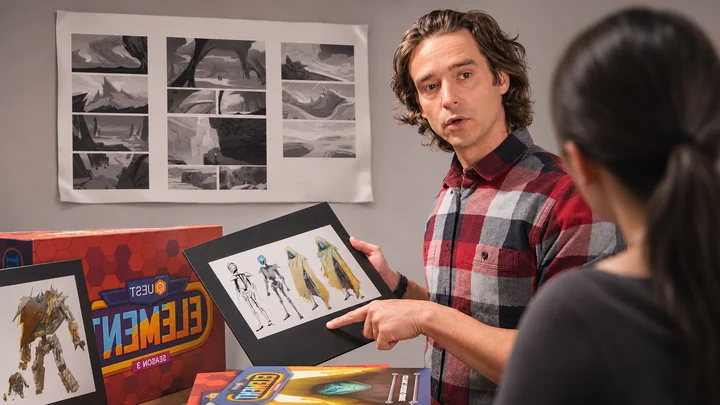
Creative Director, Quest
I direct
I lead from inside the team, not above it. That's where the fun happens.
- Role
- Quest Creative Director
- Scope
- Quest Seasons 1–3, Apex Academy and Starforce
- Responsible for
- Art direction, animation and sound approval, voice direction, budgets and schedules
- Worked with
- Up to nine artists, Heck animation studio, a Unity developer, up to 22 voice actors
- Years
- 2020–2026
As Creative Director I was responsible for how Quest looked, sounded and read. I art directed the artwork, approved all animation and sound, and cast and directed the voice actors for every Quest series and season.
I also managed the budgets, deadlines and deliveries, coordinating between the artists, the animators and the Unity developer. The final delivery date always came first, but I built a pipeline that left room for as much quality as a season could hold. When a part of the story needed extraordinary polish, I put in the extra hours on my own time to get it there.
Quest was created at ProSolve by Travis Allen. I led its creative side.
Directing video and art
How I direct: my storyboards against the finished episode, and the notes, paintovers and feedback that get the art there.
Directing voice talent
Getting to work with voice actors this talented is a privilege and a thrill. I cast every actor and directed every session. In each clip you hear my note to the actor, then their new read.
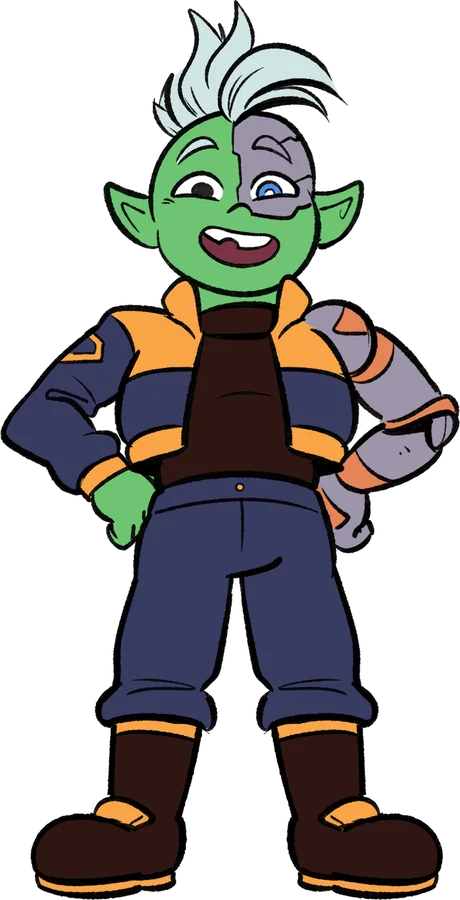
Starforce
Drago
My note to the actor, then the new read.
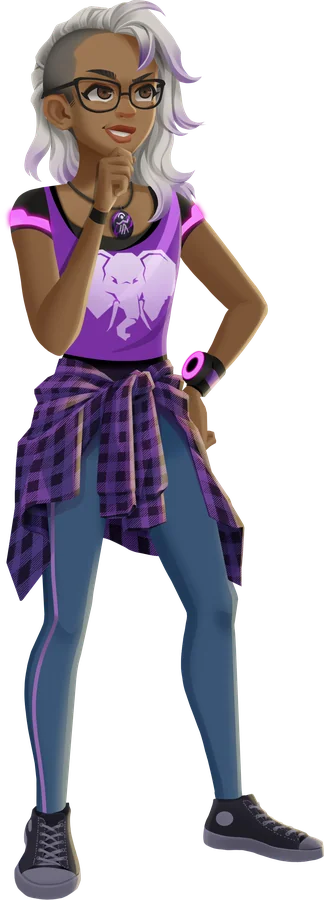
Quest
Maya
My note to the actor, then the new read.
Projects I directed
Quest Seasons 1–3 (Collapse, Glitch and Element), Starforce Seasons 1–2 and Apex Academy. Each page has the art, the process and the credits.
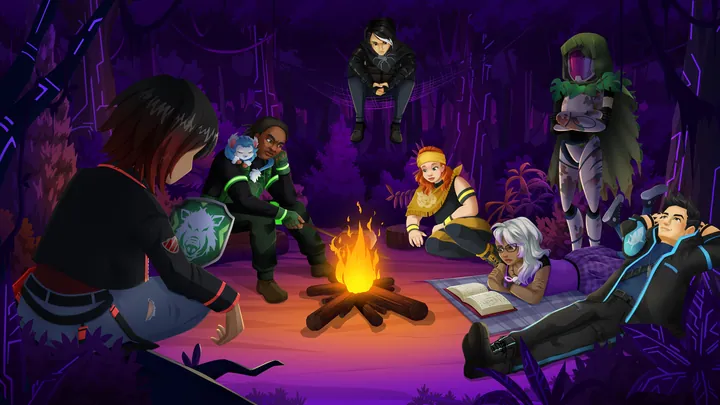
Collapse, Glitch and Element
Creative Director, writer, storyboard artist, voice director. Collapse, Glitch and Element: three seasons for grades 3 to 5, one new world each year.
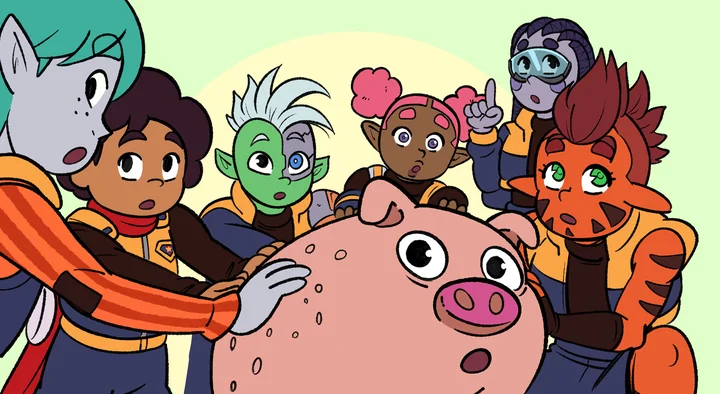
Starforce
Creative Director, writer. A space-crew comedy for K–2. I conceived it (the name, concept and logo), then directed it and wrote scripts for the show.
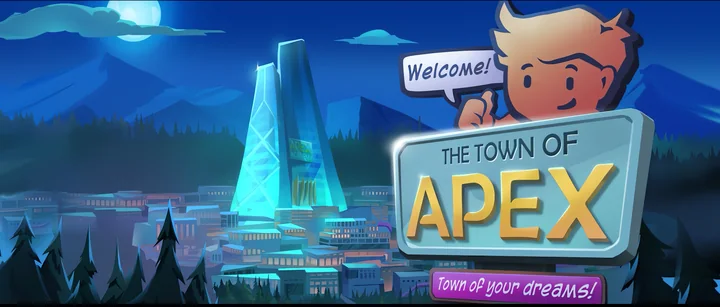
Apex Academy
Creative Director, writer, storyboard artist, voice director. Quest was a summer-camp hit. Apex Academy expanded it into the school day, for grades 3 to 5.
Artist assignment board
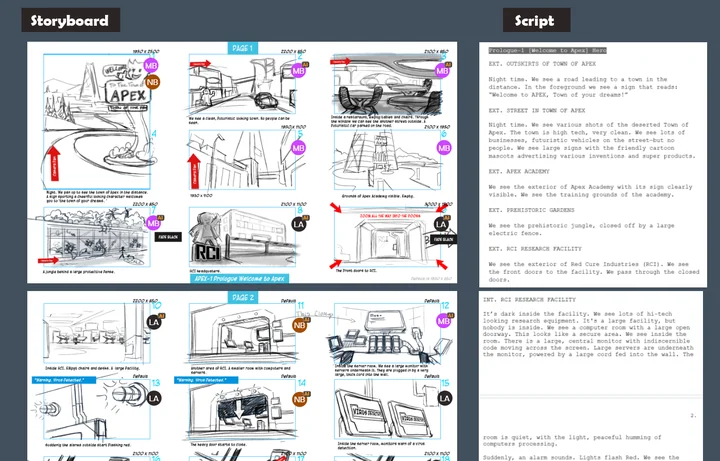
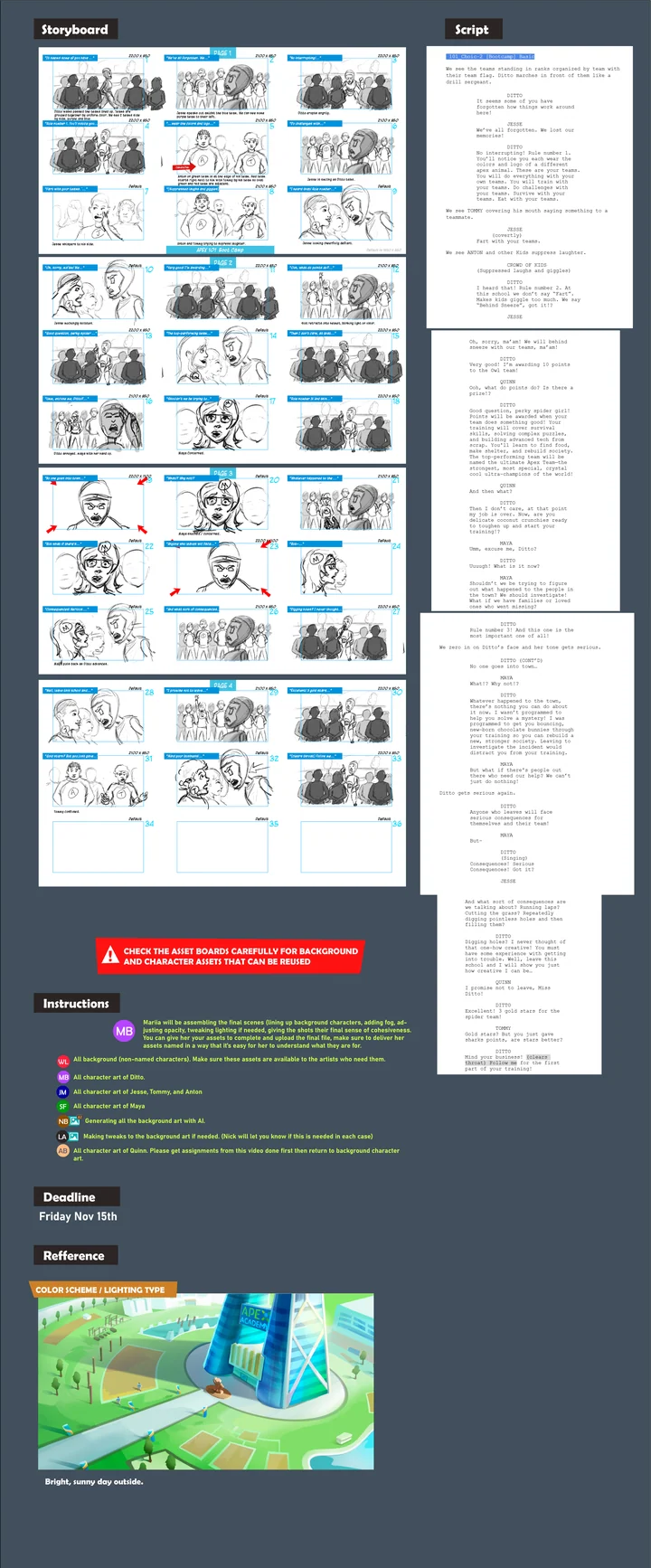
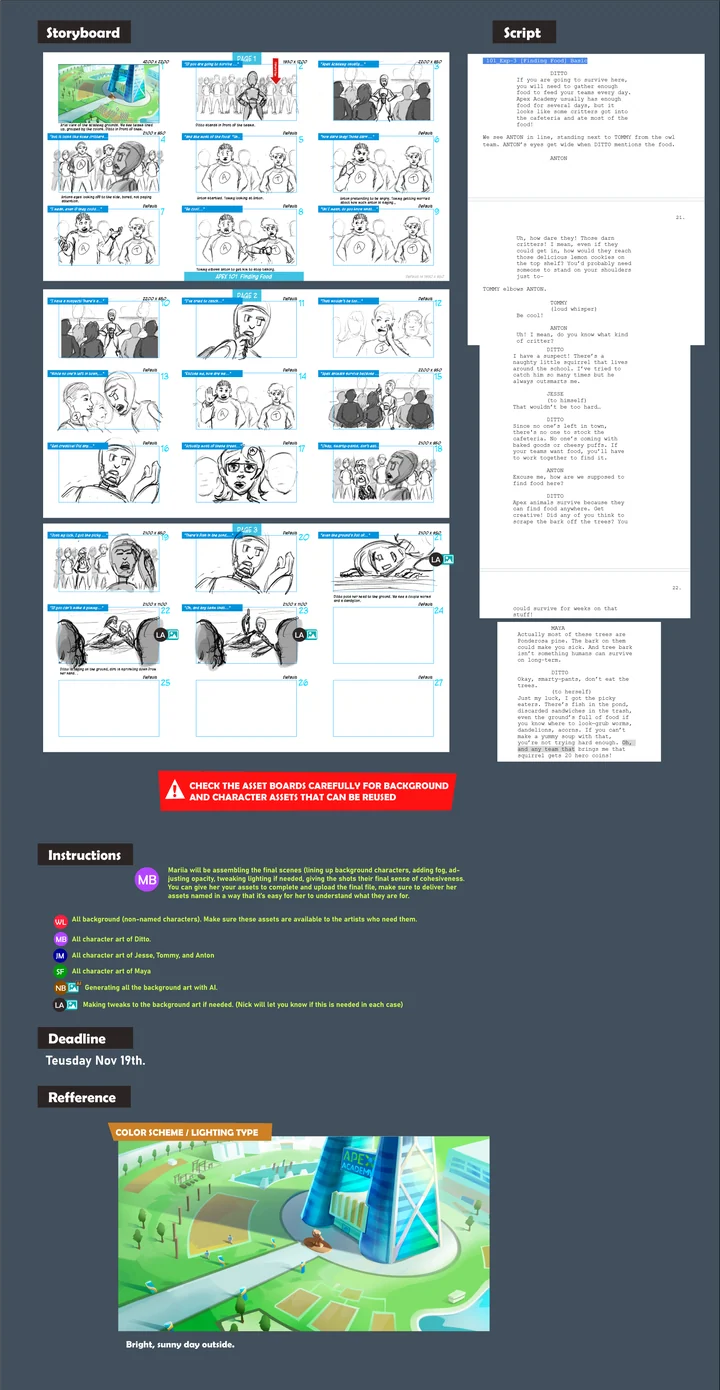
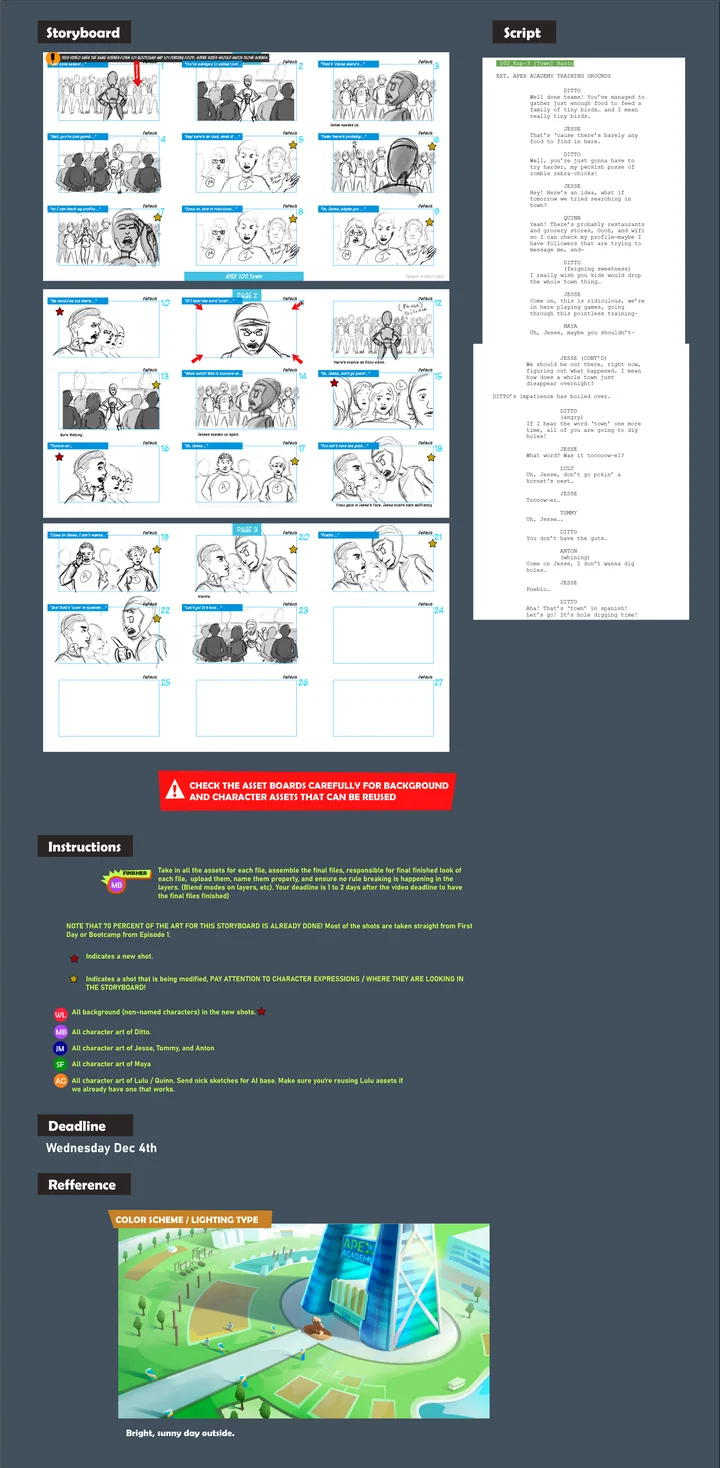
My artists worked in different countries and very different time zones, so every assignment had to be clear at a glance. I created the artist assignment board: the script beside the storyboard, with each section marked for the artist best suited to it. Each board held everything an artist needed for that video, so nobody went hunting, and it let us play to every artist's strengths on a very tight schedule.
Painting from imagination
On Quest there was rarely time to hunt for reference. The shot lists were long, the budget was small and the delivery windows were tight, so every hour spent searching for photo reference was an hour taken away from getting the art in on time. There was little room for concept passes, color studies or lighting studies either.
So I leaned on something I love: painting from memory. I've practiced it for years, and a solid grasp of form, light, shadow and anatomy lets you put a character in any lighting, setting or situation quickly. I'm not against reference. Quest just needed a team that could work without much of it.
That is why so much of my feedback is about light sources, cast shadows and hard-edged light. I taught my artists to paint from imagination, and to aim for believable rather than perfect, so we could deliver every shot on time.
Just knowing the rules you know about light, shadow and form, it allows you to really play. And you don't have to get it exactly right. If you know enough to make it look believable, you can have a lot of fun with it.
From one of my recorded feedback sessions
Art direction, recorded
I worked with artists across a wide range of experience. For newer artists, a recorded session was often the best way to teach the principles that would carry them through the season and beyond. These are real sessions: I work over the artist's painting in Photoshop, compare versions and explain each choice. Select play for sound.
The paintovers these notes led to are on I make.
Animatics
For some videos an animatic made sense: it gives the final animators and editors a template for timing and motion. Because I'm fluent in After Effects, I can put an idea into motion and show what is hard to describe in words, so even complex scenes are easy to understand. Here is my animatic for the trailer of one of our most popular seasons, Season 2: Glitch. Recently I updated that trailer with AI tools to push the cinematic experience even further.
Showing the build team what I mean
I mock up game interactions in After Effects, so the Unity developer can see exactly how a screen should move and respond before building it. It turns my vision into something tangible that is easy to build from.
At the center of every season
Every part of a season ran through me, from the first script to the last approved shot.
- Story and scriptsWrote the episodes: plots, twists, jokes, dialogue
- Storyboards and animaticsBoarded the episodes and set timing and camera
- IllustratorsUp to nine artists: daily reviews and paintovers
- Animation studioSent the music for timing, approved every shot
- Sound and musicChose the music and sound effects, approved the mix
- Voice actorsCast them, directed every session, picked each take
- Packaging and printBoxes, boards and cards; approved all graphic design
- Unity gameGame art, and UI motion mockups for the developer
- Budget and scheduleBudgets, deadlines and deliveries
Direction on the page
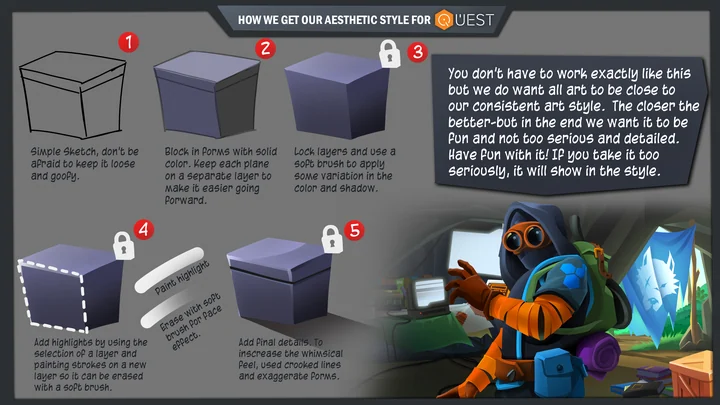
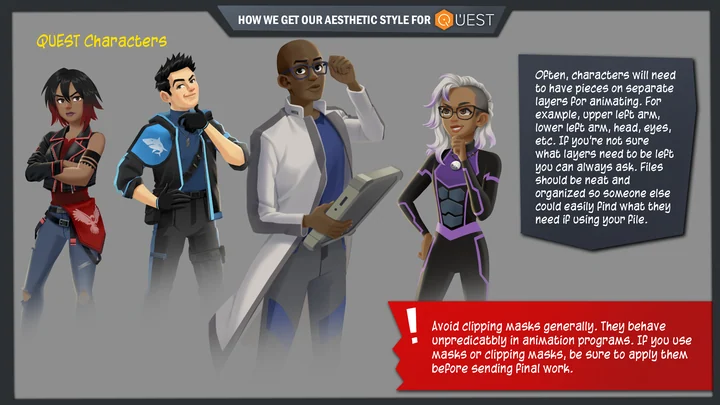
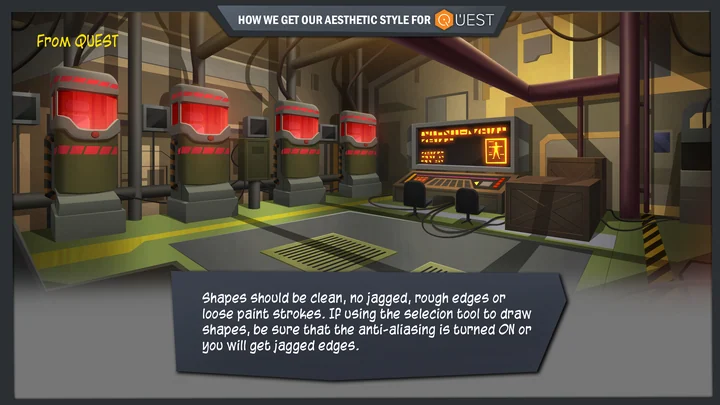
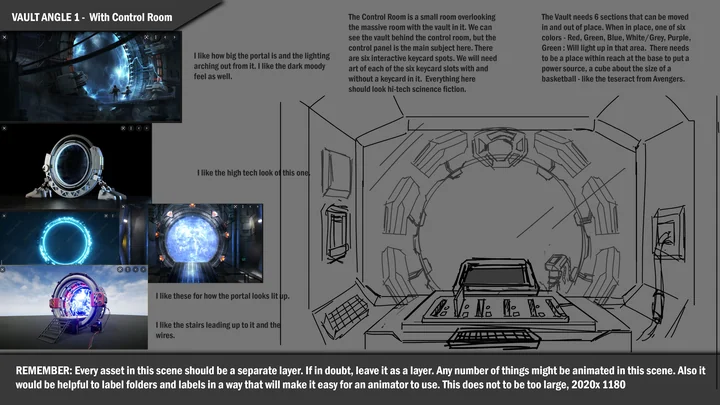
The style guides I put together to onboard artists, and a mood board from pre-production.
Mood board: the Town of Apex
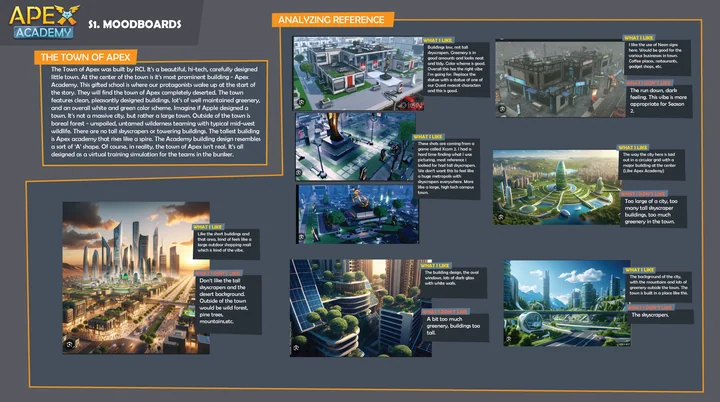
The collected images are other artists' work, used as reference before production. The notes and the direction are mine.